
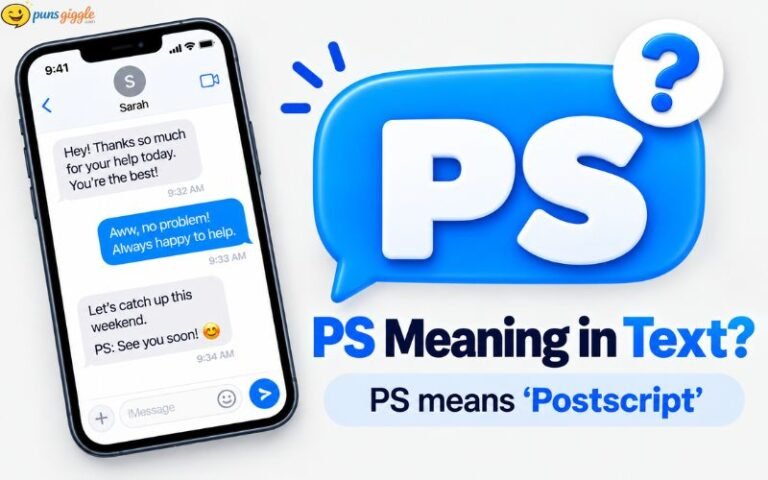
What Does PS Mean in Text? Have you ever received a text message that ends with “PS” and wondered what it means? Maybe a friend sent you a message, then added “PS: Don’t forget your keys” at the very end. If you’ve seen this, you’re not alone.
PS usually stands for “postscript.” It’s a short note added after the main message, often to share an extra thought, a reminder, or something the writer forgot to mention earlier.
You’ll see PS in text messages, emails, social media posts, and even handwritten letters. It’s a simple little abbreviation, but people use it in different ways. Sometimes it’s practical, sometimes it’s funny, and sometimes it adds a personal touch to a message.
In this guide, we’ll explain what PS means in text, where it came from, how people use it in everyday conversations, and how it differs from similar abbreviations.
What Does PS Mean in Text?
In texting, PS means “postscript.” It comes from a Latin expression that means “written after.” People use it to add a message after the main part of a text or letter is finished.
For example:
“Thanks for helping me today! I really appreciate it.
PS: I owe you a coffee!”
The main message thanks the person, while the PS adds one extra thought. The writer could have included it in the original message, but adding it at the end makes it stand out.
PS is not usually internet slang with a hidden meaning. It has been used in writing for a long time, and people still use it in casual digital conversations because it’s quick and easy.
You don’t need to write it in capital letters every time, either. Both “PS” and “P.S.” are common. The meaning stays the same.
Where Did PS Come From?
PS started as a writing abbreviation long before texting and social media existed. It comes from the Latin phrase post scriptum, which means “written after.”
Writers used it when they finished a letter and then remembered something they wanted to add. Instead of rewriting the whole letter, they simply wrote a postscript at the bottom.
The habit carried over into printed letters, books, emails, and eventually text messages. Even though people can edit digital messages more easily today, PS remains useful because it makes an extra thought feel separate from the main message.
That’s part of its charm. A PS can feel like someone saying, “Oh, one more thing!” after they’ve already said goodbye.
Related Post: OFC Meaning: What Does OFC Mean in Text and Chat?
PS Meaning — Quick Breakdown
PS usually has the same basic meaning, but the purpose of the extra note can change depending on the conversation.
| Meaning or use | Example sentence | Tone or context |
|---|---|---|
| Adding forgotten information | “PS: The meeting starts at 10.” | Practical |
| Sharing a reminder | “PS: Bring your charger tomorrow.” | Helpful |
| Adding a joke | “PS: Your cooking still owes me an apology 😂” | Playful |
| Showing affection | “PS: Miss you already!” | Sweet or personal |
| Emphasizing an extra thought | “PS: You were right about that movie.” | Casual or sincere |
In most cases, you can understand PS by reading the words that come after it. There’s no need to search for a secret meaning.
How to Use PS in a Sentence
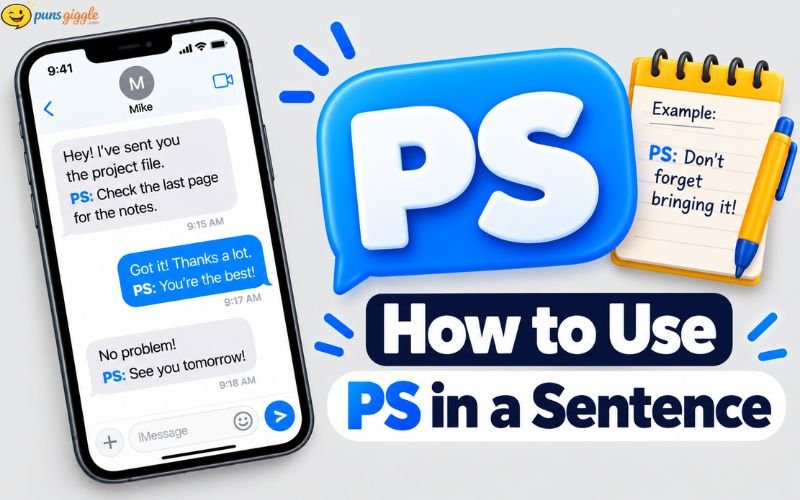
Using PS is easy. Finish your main message first, then add the extra thought at the end. Here are some natural examples of how people might use it in everyday conversations.
When texting a friend
“Hey, I’ll meet you outside the mall at 5.
PS: Don’t be late this time 😂”
The PS adds a playful reminder without changing the main message.
When sending a sweet message
“Hope you have the best birthday ever! You deserve so much happiness.
PS: I’m really glad we’re friends.”
This makes the final thought feel more personal.
When sharing information
“I sent you the notes from today’s class.
PS: Check the last page for the homework.”
The PS draws attention to a useful detail the person might otherwise miss.
When writing a social media caption
“Had such a great weekend with my favorite people.
PS: We definitely need to do this again soon!”
It adds a casual afterthought and gives the caption a friendly tone.
When making a joke
“Thanks for inviting me to dinner. Everything was amazing.
PS: I’m taking home the leftovers.”
Here, PS adds a funny final line that feels like an extra comment.
When sending a work message
“Hi Sam, I’ve attached the updated report for review.
PS: The revised figures are on page three.”
This works in a professional setting when the extra detail is short and relevant. For more formal communication, though, including important information in the main message is usually clearer.
Related Post: What Does PMO Mean in Text? Slang Meaning, Uses, and Examples
PS vs. Similar Abbreviations
PS is often confused with other short forms because they can all appear at the end of a message. However, each one has a different purpose.
| Term | Meaning | How it’s different |
|---|---|---|
| PS | Postscript | Adds an extra thought after the main message |
| PPS | Post-postscript | Adds another note after the PS |
| BTW | By the way | Introduces an additional point within a conversation |
| FYI | For your information | Shares information someone may need to know |
For example, you might write “BTW, I saw your cousin yesterday” in the middle of a conversation. You could use “PS: I also saw your cousin yesterday” as an extra note at the end of a longer message.
PPS is less common in everyday texting, but it still appears when someone has a second afterthought.
Where Will You See PS Used?
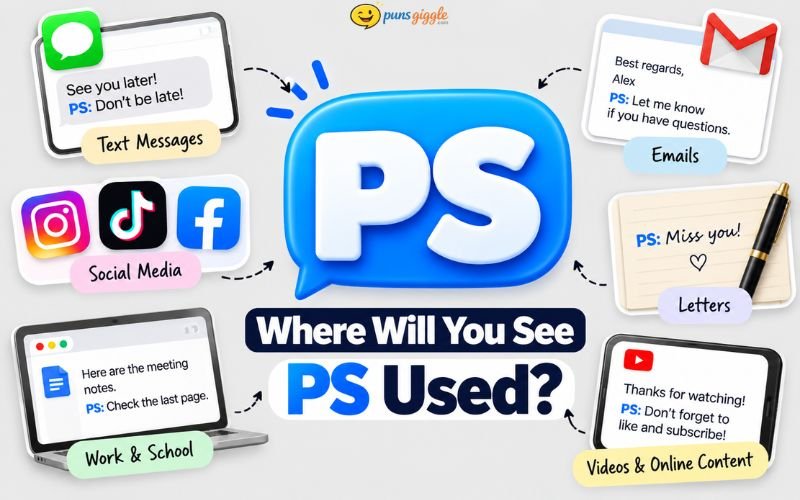
PS isn’t limited to one social media platform or age group. It’s a general writing abbreviation that people use in several settings.
Text messages
Friends and family often use PS to add reminders, jokes, or affectionate comments after the main message. It can make a short text feel more natural.
Instagram and Facebook
People sometimes add PS to captions or comments to include an extra detail. For example, “PS: All these photos were taken in one afternoon!”
TikTok
PS may appear in captions, video descriptions, or comments. Someone might use it to add a funny clarification or mention something they forgot to say in the video.
Emails
Email is one of the most familiar places to see PS. People use it to add a reminder, a personal note, or a small detail after their signature.
Handwritten letters
PS has a long history in letters. Even now, it can give a handwritten note a personal touch, especially when the writer remembers something after finishing the main message.
Work and school messages
Students may use PS to add a homework reminder, while coworkers may use it for a quick extra detail. Still, important instructions should be stated clearly in the main message.
Related Post: What Does WYM Mean in Text? Meaning, Slang, and Examples
Common Mistakes People Make With PS
PS is simple, but a few misunderstandings are worth clearing up.
Thinking PS means “please”
PS does not normally stand for “please” in standard texting. It usually means “postscript.” Some people may use abbreviations in their own unusual ways, so context still matters.
Using PS before the main message is finished
PS is meant for an extra note after the main message. If the information belongs in the main text, it’s usually better to put it there instead.
Confusing PS with PPS
PS introduces the first extra note. PPS means “post-postscript” and can introduce another note after the first one.
Putting too much information in a PS
A PS works best when it’s short. Adding several long paragraphs after it can make the message confusing. If you have a lot more to say, simply continue the main message or send a separate text.
Related PS Phrases and Variations
You may come across a few variations when reading messages, letters, or emails.
| Phrase | Meaning |
|---|---|
| PS | The first extra note after the main message |
| P.S. | An alternative way to write PS |
| PPS | A second postscript added after PS |
| PPPS | A third postscript, used when someone has another afterthought |
These forms are not different types of slang. They’re variations of the same writing convention.
You don’t need to use PPS or PPPS often. In casual texting, one short PS is usually enough.
More Related Post:
- What Does TT Mean? Meaning, Slang, and Texting Uses
- What Does DND Mean? Meaning, Slang, and How to Use It
- What Does ICL Mean in Text? Meaning, Slang, and Examples
- What Does ASP Mean in Text? Meaning, Slang & Examples
Frequently Asked Questions
What does PS stand for in texting?
PS stands for “postscript.” It introduces an extra thought or detail added after the main message has been written.
What does PS mean from a girl or a guy?
It usually means the same thing regardless of who sends it. The words after PS reveal whether the extra note is friendly, funny, romantic, or practical.
Is PS rude in a text message?
No, PS isn’t rude by itself. Its tone depends on the message that follows, which could be a joke, a reminder, or a sincere comment.
What is the difference between PS and PPS?
PS is the first extra note after the main message. PPS means “post-postscript” and introduces another note after the PS.
Can I use PS in a professional email?
Yes. PS can work in a friendly or informal professional email, especially for a brief reminder. Important details should still appear in the main message.
Should PS be written as PS or P.S.?
Both forms are widely understood. “PS” is common in digital messages, while “P.S.” is a traditional style. Choose one and keep your writing consistent.
Final Thoughts
Now you know that PS means “postscript” and is used to add an extra thought after the main message. It’s a simple way to include a reminder, share a joke, or add something personal without rewriting what you’ve already said.
You’ll see it in texts, emails, social media captions, and letters. The meaning is usually clear from the context, so there’s no need to overthink it.
My advice? Use PS when you genuinely have one more thing to say. Keep it short, make sure it fits the conversation, and let it add a little something extra to your message. Sometimes, that final thought is the part people remember most.
