
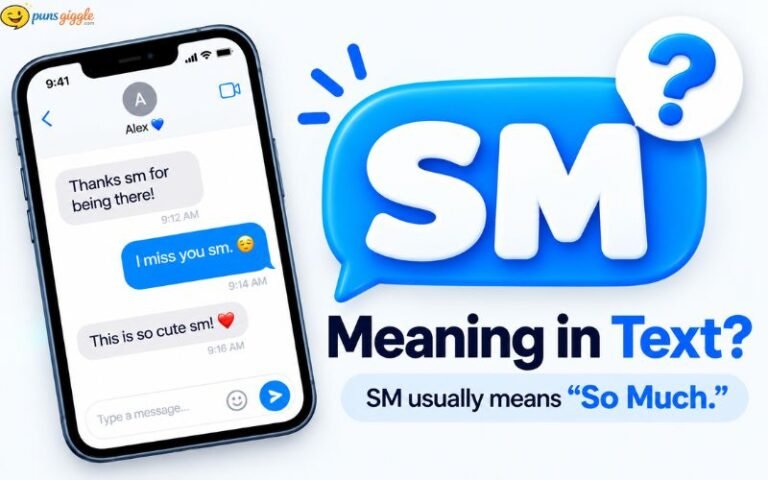
Have you ever received a text that simply said “SM” and had no clue what the person meant? You’re definitely not alone. Short slang terms can be confusing because the same two letters may mean different things depending on the conversation. In texting, SM most commonly means “so much,” especially in phrases like “I miss you sm” or “thank you sm.” It can also have other meanings in certain chats, social media posts, or online communities.
In this guide, we’ll look at what SM means in text, where it came from, how people use it naturally, and how to tell which meaning someone intended.
What Does SM Mean in Text?
In everyday texting, SM usually means “so much.” It is a quick way to shorten the phrase when someone is typing casually.
For example:
- “I miss you sm.”
- “Thank you sm!”
- “I love this sm.”
- “You helped me sm.”
In each case, SM = so much.
It is especially common when people want to keep a message short. You may see it in texts, Instagram comments, TikTok comments, Snapchat messages, and other casual online conversations.
There is one catch, though. SM does not always mean “so much.” Depending on the topic, it can stand for other phrases. Context matters a lot.
For example, in some online communities, SM can mean social media, while in other contexts it may refer to something completely different. If someone says, “I saw it on SM,” they probably mean social media. If they say, “I miss you sm,” they almost certainly mean “so much.”
So, don’t look at the two letters alone. Read the whole sentence.
Where Did SM Come From?
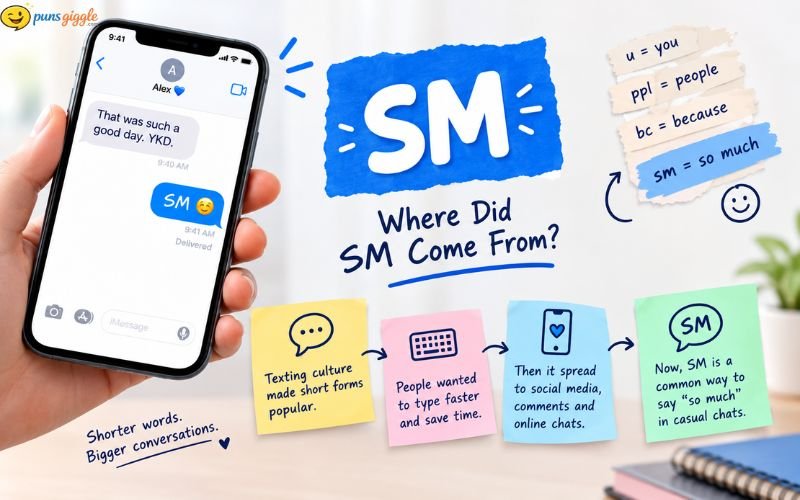
There isn’t one single moment when SM became texting slang. It grew naturally from the wider habit of shortening words and phrases online.
Texting culture made abbreviations popular because people wanted to type quickly. Words such as “you” became “u,” “people” became “ppl,” and “because” became “bc.” Short forms like SM fit neatly into that style.
As texting moved onto social media, these abbreviations became even more common. People started using them in comments, captions, private messages, and casual conversations.
The “so much” meaning is especially easy to understand because it often appears at the end of a sentence. Over time, people became familiar with expressions like “love you sm” and “thanks sm.”
Today, SM is less about saving a huge amount of typing time and more about keeping messages relaxed and informal. That’s just how internet language works sometimes.
Related post: DSL Meaning Slang: What Does DSL Mean in Text?
SM — Quick Meaning Breakdown
| Meaning | Example Sentence | Tone/Context |
|---|---|---|
| So much | “I miss you sm.” | Casual, emotional |
| So much | “Thanks sm for helping!” | Friendly, appreciative |
| Social media | “I saw your post on SM.” | Casual, online |
| Social media | “SM is full of funny videos today.” | Informal, conversational |
| Other abbreviation | “The meaning depends on the group or topic.” | Context-specific |
The first meaning, “so much,” is usually the one people mean in ordinary texting.
The phrase becomes especially clear when SM comes after an emotion or action. “I love this sm” is a good example. There isn’t really another natural reading there.
Still, if you’re unsure, check the words around SM before assuming what it means.
How to Use SM in a Sentence
Using SM is pretty simple when you mean “so much.” It normally appears in casual writing rather than formal communication.
Here are some natural examples:
Texting a Friend
“Thanks sm for coming over!”
This means, “Thanks so much for coming over!”
Showing Emotion
“I miss my old friends sm.”
Here, SM adds emphasis to the feeling.
Talking About Something You Like
“I love this song sm.”
This means you like the song a lot.
Replying to Someone
“You made my day sm.”
It is a casual way to say that someone made your day a lot better.
On Social Media
“This picture is cute sm.”
The writer is saying they find the picture very cute.
Showing Appreciation
“Thank you sm for explaining that.”
This is a common way to make a thank-you message sound warm and casual.
One small tip: SM works best in relaxed conversations. I wouldn’t use it in a job application, school essay, business email, or other formal writing. There are better places for proper “so much.”
SM vs Similar Slang Terms
| Term | Meaning | How It’s Different |
|---|---|---|
| SM | So much | Short form often used after feelings or actions |
| SO MUCH | So much | Full phrase, clearer and more formal |
| A LOT | A large amount / very much | Similar meaning but not an abbreviation |
| TSM | Thanks so much | A more specific texting abbreviation |
These terms can overlap, but they aren’t always interchangeable.
For example, “I miss you sm” sounds natural because SM works as a short version of “so much.” On the other hand, simply replacing every “a lot” with SM wouldn’t work.
You might also see TSM, especially in quick messages. It usually means “thanks so much.” That’s more specific than SM because it includes the word “thanks.”
Where You’ll See SM Online
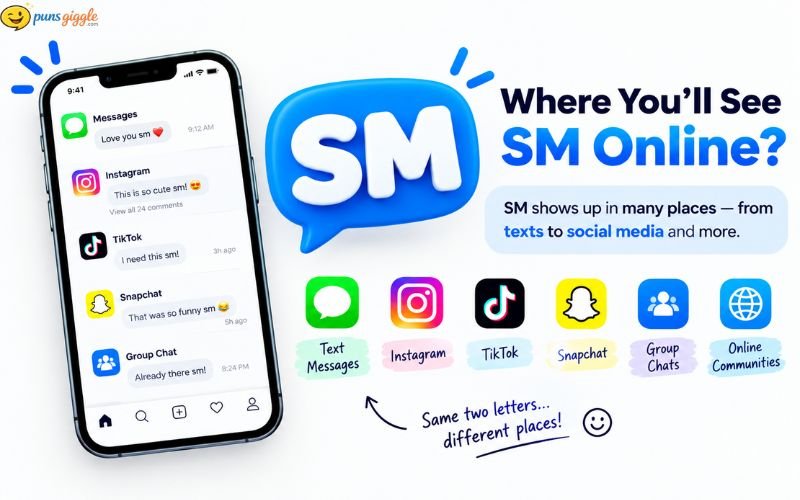
You’ll most often see SM in casual digital conversations.
Text Messages
This is probably the most straightforward place to find it. Friends and family may use SM to make messages shorter.
“Love you sm ❤️” is a very typical example.
TikTok and Instagram
People often use short slang terms in comments and captions because social media writing tends to be quick and informal.
You may see things like:
“This is funny sm.”
or
“I need this sm.”
Snapchat
Snapchat conversations are usually quick and casual, so abbreviations fit naturally there.
Group Chats
Group chats are another common place for SM. People are often typing quickly while several conversations happen at once.
Online Communities
SM can also mean something other than “so much” in a particular online community. Gaming groups, work groups, fandoms, and other communities sometimes create their own abbreviations.
That’s why context matters.
Related Post: YKD Meaning in Text: What Does YKD Mean in Chat?
Is SM Used by Gen Z?
Yes, SM is commonly seen in casual online language used by younger internet users, especially when it means “so much.”
You might see phrases such as:
- “I love this sm.”
- “I want this sm.”
- “That made me laugh sm.”
- “I miss summer sm.”
- “This is cute sm.”
That doesn’t mean older people never use it. Internet slang spreads across age groups pretty quickly. Someone who spends a lot of time texting or using social media may recognize and use SM regardless of age.
The main thing is the setting. SM belongs more naturally in casual digital communication than in formal writing.
Common Mistakes People Make With SM
1. Assuming It Always Means “So Much”
This is probably the biggest mistake.
SM has multiple possible meanings. If someone writes, “I saw it on SM,” they may mean social media, not “so much.”
2. Using It in Formal Writing
Writing “Thank you sm for your email” to a manager would look overly casual.
Use “Thank you so much” in professional messages instead.
3. Reading It Without Looking at Context
Two letters don’t tell you everything. Always check the rest of the sentence.
“I miss you sm” and “I found it on SM” are likely using SM differently.
4. Assuming Everyone Knows the Abbreviation
Not everyone follows internet slang. If you’re talking to someone who may not know SM, spelling out “so much” can avoid confusion.
Related Phrases and Variations
| Phrase | Meaning |
|---|---|
| Thanks sm | Thanks so much |
| Love you sm | Love you so much |
| Miss you sm | Miss you so much |
| TSM | Thanks so much |
These variations are mostly found in casual messages.
You’ll often notice that SM comes after a verb or adjective. That’s a useful clue when you’re trying to understand it.
For example, “I love this sm” makes sense as “I love this so much.” Once you spot that pattern, the abbreviation becomes much easier to recognize.
Is SM Always a Slang Term?
Not necessarily.
SM is an abbreviation, and its meaning depends heavily on where you see it. In casual texting, it often works as slang for “so much.” But outside texting, the same letters can represent different words or phrases.
For example, businesses, organizations, online communities, and technical fields may use SM as an abbreviation for something unrelated to texting slang.
That’s why it’s risky to create one fixed definition for every situation.
When you’re reading a message from a friend, though, the surrounding words usually give you enough information to figure it out.
Can SM Be Used in a Conversation?
Yes. It’s mostly used in written casual communication, rather than spoken conversation.
Someone might text:
“I miss you sm.”
But when speaking, they would normally say:
“I miss you so much.”
People generally don’t pronounce “SM” as the letters when talking. It’s mainly a shortcut for typing.
That makes it similar to many other internet abbreviations. You see them on a screen far more often than you hear them out loud.
See Also: What Does WYDD Mean? Meaning, Slang Usage, and Examples
FAQs About SM in Text
What does SM mean in texting?
SM most commonly means “so much” in casual texting. For example, “I miss you sm” means “I miss you so much.”
What does SM mean on social media?
SM can mean “social media,” especially when discussing platforms, posts, or online activity. Context tells you which meaning is intended.
What does “I love you sm” mean?
It means “I love you so much.” The SM simply replaces the full phrase “so much.”
Is SM slang?
Yes, when it is used as a shortcut for “so much” in casual texting, it can be considered internet slang or texting shorthand.
Can I use SM in formal writing?
It’s better not to. Use “so much” instead in emails, school assignments, job applications, and professional writing.
What does TSM mean in texting?
TSM commonly means “thanks so much.” It is another casual abbreviation used in online messages.
Conclusion
So, what does SM mean in text? Most of the time, it means “so much.” You’ll commonly see it in messages such as “I miss you sm,” “thanks sm,” or “I love this sm.”
The interesting part is that SM isn’t limited to one meaning. In some situations, it can mean social media or another phrase entirely. The words around it usually give you the answer.
If you’re new to texting slang, don’t worry about memorizing every abbreviation you see. Context does most of the work. Once you’ve seen SM used a few times, messages like “thank you sm” will feel completely normal.
